A short story

"Ticket please," he asks.
"I don't have a ticket." But he nods towards my hand. And of course, I am holding a ticket. I look at it. It's stamped with only two possibilities, Heaven or Hell. Of course, my ticket is punched Hell.
So right there, in the elevator, jumbled memories flow...
I remember my early life in a protestant church run more like a petty, gossipy social club than an institution of faith. My parents dragging us all to church more for show than out of any sense of deeply held religious conviction. I remember Christmas pageants with dubious casting, Vacation Bible School in the fellowship hall, and the Red-Letter Bible the congregation presented to me when I formally joined the church as an adolescent. They had my name inscribed on the cover. I still have it.
I recall later losing whatever faith the church instilled in me. But was it faith? Or just a young person going through the motions in small town America? In fact, as a young child, the most important lesson I learned in church was the value of sitting still. Otherwise I'd be beaten when we got home. Surely, that's faith of a sort. The faith of Pavlov's dog.
Decades later, I remember Bart Ehrman had a huge impact on my parents. I think he gave them the permission they sought to leave the church. And their faith. But I do not trust him because he only criticizes Christianity and never has much to say about other religions. Yes, I realize he is a New Testament scholar and I'm sure he would argue that he simply sticks to his knitting. But I find it odd to advance disbelief without some mention of other faith systems. It makes me question the former evangelical's motives.
I remember that Daniel Dennett reminded me of an heretical Santa Claus, and consequently, I could never take him seriously. I know I should be embarrassed to admit this. But I'm not.
I also remember the ever thoughtful Sam Harris and his books The End of Faith and Letter to a Christian Nation.
I recall Harris debating some famous brain dead actor on national television. Only the completely ignorant and incurious can muster the actor's level of self-righteous anger.
I remember the courage of Ayaan Hirsi Ali, who also has to deal with ignorant, incurious, self-righteous anger from people much more immediately dangerous than some sciolistic actor. People of faith.
I remember Richard Dawkins' hand-painted neckties.
But I also remember It's a Wonderful Life. And the numinous wedding scene in The Sound of Music.
I remember it was the fourth horseman who made the subtle but important distinction between the numinous and the supernatural. He then went on to...
The attendant clears his throat.
No, I did not expect to be here in this elevator. I expected nothing.
I realize that I'm still looking at the ticket. "Heaven" I announce weakly. The attendant looks at me rather skeptically, but pushes the lever forward and holds it there. I recall vaguely that the lever was sometimes called a deadman switch. Quite so.
It's a slow journey upwards and it gives me time to gather my thoughts. But not enough time. The doors creak open and I can see the pearly gates. Just as described by the faithful. But I expected a line; I needed a line for more time.
"Where's the line?" I mutter.
As the elevator doors close, I hear the attendant saying, "No lines in Heaven."
There's a gatehouse, an office of sorts, and Saint Peter looks up and sighs. "I'm pretty sure your ticket is otherwise punched young man." I'm well north of fifty, but I guess everyone is young to the first apostle.
"I was hoping there's some type of appeal process."
"Hmm...well, anything is possible here. But you'll have to take it up with the Boss."
There may be no lines in heaven, but there is a rather large waiting room. Saint Peter points me to it. There is a sign over the door that says Purgatory. "You can wait there." Peter says.
Purgatory is like a large doctor's office waiting room. I find a seat and just as I am sitting down, an angel with a clipboard appears in a doorway on the other side of the vast chamber. She calls out loudly, "Hitchens. Christopher Hitchens." I see Hitch rise from a near slumber. I don't know how he managed it, but I swear he's holding two fingers of Johnnie Walker Black in one hand and the latest issue of Vanity Fair in the other. As he makes his way across the room, he looks like he's off to another debate with some poor theologian. But I can no longer share his confidence. I mean, here we are.
If they are just now getting to Hitchens, looks like I am going to be here for some time. Unlike a doctor's office waiting room, and unless you are Christopher Hitchens, there is no reading material in Purgatory. Not even five-year-old National Geographics. And I've left my iPhone somewhere. I look around and apparently everyone else has as well. No, there is only one thing to do here in Purgatory. Sit and ponder.
The Lord is sitting at the bench starring at a computer. He looks up, "Ah yes, I have your file here."
"I did not expect You'd be computerized Lord."
"Neither did I. But Steve Jobs showed up a few years back and brought me a Mac. Revolutionized the place. So much better than that contraption Henry Ford brought Me a few decades earlier.
"Now I see that We've judged you guilty of lack of faith, disbelief, and general heterodoxy. Is that so?"
"Yes Lord, I am guilty of that offense."
The Lord grimaces, "You did not believe in Me? You lived a life without Me?"
"Sadly, yes my Lord."
"Well it's a pretty clear cut case; you don't belong here. What am I missing?"
By now, I have had lots of time to consider how I would answer the Lord. "Well Lord, it is true that I lived a life without You. But I did live by two principles which I think You approve of."
The Lord gestured that I could continue.
"Well the first of these is Treat others the way you wish to be treated."
"That's the Golden Rule and you can find it in the Bible," the Lord interrupted.
"Yes Lord, but it need not be. I would argue that it is entirely practical. We may treat others well out of the goodness of our heart or because You command it. Or we may not. But one reason to treat others well is that we hope that they will return the favor. Some don't, but most do."
"And your second principle?" asks the Lord.
"My second principle was Live and let live. Most people agree with it in theory. Just ask them. But very few seem to be able to follow it in practice. People want other people to believe in their god, to join their church or political party or environmental crusade, and to basically think and act like themselves. This seems to be human nature. And when others fail to do so, this can and does lead to various levels of separation and dispute.
"I always thought that unless someone is hurting someone else, I needed to respect their choices and leave them alone."
"Yes, yes, very wise" sayeth the Lord.
"Anyway, I tried very hard to live my life by these two principles."
"Yes, your record indicates a good life. Perhaps not exemplary, but on balance a very good life."
"I'm no saint, my Lord."
"No one has to be my child. Now, that's all well and good, but you still lacked faith."
"Yes Lord, and I have had lots of time to think about it. And here is the question that I wish to put to You: Does lack of faith make me a bad person, ineligible for heaven and eternal salvation?"
"Well that is Our precedent, yes."
"Then Lord, with all due respect, You are correct, I don't belong here. You agree I lived a good life, but insist upon belief that I could not find."
And then a most surprising thing happened. Unbeknownst to me, Saint Peter had slipped into the back of the courtroom. And suddenly he spoke. "May I be heard, my Lord?"
"Of course Peter, always."
"Lord, I have been the Keeper of Your Gates for some time now. And I can tell You that we have admitted many many applicants with faith, but also with, hmm, how should I put this? Less than stellar records.
"Of course, they're all believers, and they've all asked for and received Your forgiveness for their transgressions. We only admit the truly penitent. But nonetheless, my Lord...well, You've seen the records Yourself.
"Honestly Lord, for some of these characters, I often wonder if faith is not merely an excuse for misbehavior? It's as if faith itself is some form of indulgence."
"What are you saying Peter?"
"Well Lord, I'm asking: Can we not weigh actions and motivations along with faith?"
"Of course Peter, but faith is paramount."
"Then Lord, I would like to ask for a pardon for this applicant. Like You said, while his record is not exemplary, it is far better than some of our...current residents."
The Lord turns back to me. "You have a worthy advocate in Peter, but what do you have to say for yourself?"
"Well Lord, I was wrong and if it is not too late, I would like to ask for Your forgiveness. While alive, I never had faith. But standing here before You, I have to believe."
"Of course it's too late; that's why we're here." He thundered. He went back to His computer and I thought we were done. I turned to go and accept my fate...
But then He added quietly, "Nevertheless, pardon granted. You can thank Peter on your way through My gates."
Suddenly relieved and grateful, I meekly ask: "And Hitchens, my Lord?"
God looks up and smiles. "What a character, that guy. You know, he stood right there where you are, and said, hmm wait a second, here, I had it transcribed. He said: Lord, I hope You noticed that I didn't try and curry favor. That I was honestly unable to believe in the claims made by Your human... spokespersons. Standing before You, I no longer have to take the word of other humans on the necessary propitiations and gestures and subjections that I have to submit myself to, in order to qualify. But Lord, I cannot and will not be servile. You'll have to judge me on the life that I led. Can you imagine?"
Frankly I could imagine. That sounded exactly like something Hitchens would say.
God went on: "I had to admit that many of those whom he euphemistically referred to as My spokespersons are not here and will never be here.
"Anyway, I stopped him there, and granted him divine dispensation and had Peter admit him forthwith. There is just no way I could deliver such a clever chap to the devil."
"But aren't you worried that he'll cause unrest here Lord?" I ask.
Then God said: "Well, it did not take him long to realize that he's dead and he's here. I'm pretty sure, he'll come around. Like you, he now has his evidence.
"Anyway, just imagine how much more interesting our dinner parties will be with him here. In fact, I'm having him and Mother Teresa over this evening. It'll be a hoot. You're welcome to join us."
Thank You Lord.
Author's note
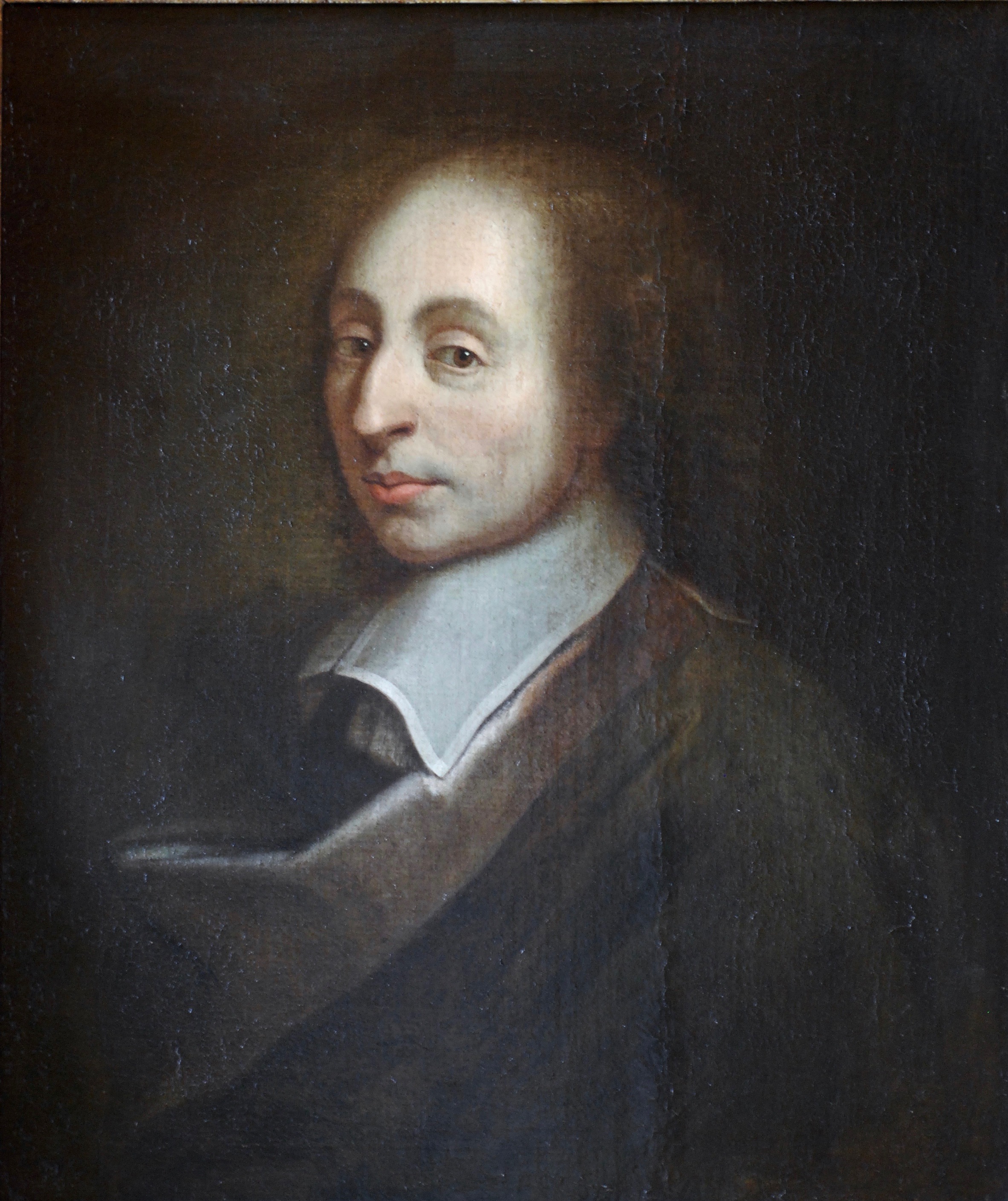
Pascal did not say that we should not weigh evidence, and as a scientist, I have no doubt that he did. But his wager demonstrates that ultimately faith is a choice, and evidence, either way and to whatever extent, is irrelevant. Faith is a choice we make in spite of doubt.
It is interesting to note that Pascal did not come to his faith as a result of his wager. Rather, he crafted his wager as a logical exercise to buttress his existing faith. Does that diminish the logical progression of his argument and certainty of his conclusion? Have faith because it is too risky to not have faith. I don't find that terribly convincing. Perhaps we can come to faith ignoring evidence. But can faith be sincere without conviction? If God sees all, what is the efficacy of faith without conviction? Pascal suggests that the probabilities of his wager don't matter, only the possible outcomes: Infinite happiness or infinite suffering or mere finite existence. Choose one. And believe accordingly. Can it be as simple as that? We all must decide for ourselves.

Personally, I've always found people of faith who are willing to admit doubt much more compelling than people of faith with no doubt whatsoever. But I would like to see all people of faith express a curiosity that extends beyond their own belief system. It would be good for them, and good for all of us. Frankly, I find the faithful's lack of curiosity... unforgivable. And dangerous.
As for the atheists, the first thing that we must acknowledge is that they do not have a duty to prove a negative. Of course not. But I have come to believe that the vast majority of them are among the most fervently religious of us all. They have simply replaced faith in the divine with faith in government. Their willingness to believe in the efficacy of government, without evidence and often in the face of evidence to the contrary, is indeed an article of faith. While certainly not true in every case (see the self-described secular conservative, Heather Mac Donald), the correlation between secular beliefs and leftist political thought is astounding. Government is their religion, and the irony is completely lost on them.