Showing posts with label Fiction. Show all posts

Friday, July 11, 2025

Oval Misdirection

A short story

Part One

The Oval Office
Early March, after the inauguration...


POTUS:  Welcome to the White House, Jim.  May I call you Jim?

Jim:  Absolutely Mr. President.  Thanks for having me.

POTUS:  Have you been here before?

Jim:  I have been to the White House many times, but only once before to the Oval Office.  Almost exactly four years ago.

POTUS:  Yes that's right; you came to see my predecessor, shortly after he took office.

Jim:  Yes, he let me have a look through that box on the coffee table there.

POTUS:  I'm sorry?

Jim:  Well, Mr. President, as best I can tell, that's the very same box he showed me.

POTUS:  Oh I see.  Yes, it's a fascinating historical archive.  A bit risqué for my taste.

Jim said nothing.

POTUS:  Yet, he never found a use for it.  I wonder why?

Jim:  I'm surprised to see it.  I thought he would have taken it with him.

POTUS:  Well we all know he was losing it at the end of his term.  I found the box in my study, the one in the residence, with the classified files only accessible to the sitting president.  He probably just forgot it.  But I do wonder why he did not turn it over to the Department of Justice earlier?

Jim:  Yeah, well, I paid him to make it go away.

POTUS:  You should have paid him to give you the box.

Jim:  I did try Mr. President.

POTUS:  Bribing a president, can you imagine?  How much did you pay him?

Jim:  I'd rather not say.

POTUS:  Well you know Jim, before he lost his marbles, he did add the financial records of that transaction to the box.  It's all in there.

Jim:  So you know what I paid him.

POTUS:  Yes Jim, I do.  You got off cheap.

Jim:  Well you know, if you've never had real money, it's hard to know what real money is.

POTUS:  Yeah, I can see that.

They were both quiet for a moment.

POTUS:  Jim, you know that I know what real money is.

Again Jim said nothing.

POTUS:  Let's come back to that.  I have another question.

Jim:  Okay.

POTUS:  How did you two get the people who filled the box with its contents to keep quiet about it?  Oh, and other people in his administration who knew about it?

Jim:  Yeah, that was my idea.  Your predecessor and I agreed that he would just tell everyone in his administration that it was a long term top secret intelligence operation.  He would keep it vague, but shut down any further investigation, or even discussion.  I mean government types...no one wants to lose their precious security clearance.

The President nodded slowly.

Jim:  He also leaked this possibility to a number of internet conspiracy types, as sort of a back door explanation for dropping the matter.  These were not leaks exactly, more like breadcrumbs that they could stumble upon.

POTUS:  Very clever.  And of course, he never mentioned exactly what agency was running this operation.  It may have been one of ours or it may have been foreign.

Jim:  Yes, that may have been the most ingenious part of the subterfuge.

POTUS:  What about your friend, the principal player who died in prison.

Jim:  He was never my friend Mr. President.  He recorded me...betrayed me.

POTUS:  Okay, your associate.  You should have listened to your ex-wife about that guy.

Jim:  Indeed.

POTUS:  And?

Jim:  Well intelligence assets sometimes die.  It is not unexpected.  So that worked out okay.

POTUS:  And his lady friend, also in prison?

Jim:  Are you kidding, she was the very first person to find out he was dead.  She does not want to suffer a similar fate.

POTUS:  The box says you had him killed.

Jim:  Well he also knew what real money is.  And besides, he proved himself to be...untrustworthy.  Something had to be done.

They looked at each other.  A minute passed.

Jim:  Are you going to let me have the box?

POTUS:  Yes Jim, I don't see why not.

Jim:  What is it going to cost me?

POTUS:  Fifty billion dollars.

Jim:  That is about a third of everything I have.

POTUS:  Yes Jim, but this time, you get the box.  Besides, you'll still be one of the richest men in the world.  Good to keep up appearances and all.  No one will be the wiser.

Jim:  And you'll keep the misdirection in place?

POTUS:  My predecessor did all the work.  I don't have to do anything except keep quiet about it.

Jim:  And your people?  Your attorney general seems to be a bit of a loose cannon.

POTUS:  Well, she likes to see herself on television.  But you know, without intending to, she's been great at obfuscating this whole thing.

Jim:  And the others?

POTUS:  So long as I keep quiet about it, my people will react just like my predecessor's people.  It's all need to know.  And what they don't know, what they cannot even imagine, is that no one knows.  It's the perfect secret...one that does not actually exist.

They both let that sink in.

Jim:  Undoubtedly you have other boxes belonging to other men...

POTUS:  I will not confirm or deny, but I needed to start with you.

They sat there.

POTUS:  Do we have a deal?

Jim:  Yes Mr. President.

POTUS:  The transfer details are there in the envelope beside the box.

Jim:  It will take time for me to get that much cash together.

POTUS:  No doubt; you have until the end of the month.

Jim:  May I come back to collect the box myself?  I don't really trust anyone with it.

POTUS:  Sure Jim.  Let's schedule a dinner for the first.  I have lots of dinners with lots of people.  I'll invite the vice president.  It will be a robust, but cordial exchange of ideas.  Again, no one will be the wiser.

Jim:  Thank you Mr. President.


Part Two

After Jim leaves, Smiley enters from the President's adjoining private study.

POTUS:  Did you hear all that?

Smiley:  Yes, the mics worked fine.  I wish you would have let me record it all.

POTUS:  Are you kidding?  Then you'd have me on tape.  I just wanted you to hear what he said.  Why does Jim think he killed the guy?

Smiley:  Well back when they were engaged in their shenanigans, Jim got to know the principal's head of security.

POTUS:  So?

Smiley:  He was one of ours as well.

POTUS:  And?

Smiley:  Like I said they got to be close.  And when Jim thought he needed to get rid of the principal, he approached this guy.

POTUS:  So what happened?

Smiley:  Well the head of security told him he could take care of it for the right price.

POTUS:  And did he?

Smiley:  You know, I've always thought it bad form to assassinate our own assets.  That's a Russian move.

POTUS:  So what really happened?

Smiley:  We faked his death.

POTUS:  He's alive?  Where is he?

Smiley:  Well after extensive plastic surgery, he's been living quietly as a retired American banker.  In Paris.

POTUS:  So let me get this straight.  Jim thinks he killed the principal.  But since he was one of yours, you faked his death, and he's living in Paris?

Smiley:  Yes, quite freely.  We chose France because, you know, the French have a much more libertine attitude towards all this kind of stuff.  Just if it ever comes to that; don't think it will.

POTUS:  But Jim thinks he successfully engineered his death?

Smiley:  Well I was not sure about that until your conversation with him just now.

POTUS:  And the money Jim just agreed to pay me?

Smiley:  I would not feel any guilt about that...you did see what was in that box.

They were quiet for a moment.

Smiley:  You are going to honor our agreement?

POTUS:  Yes Smiley, you get ten percent.

Smiley:  On all the boxes?

POTUS:  Yes of course.  But I do have a final question.  This operation, was there ever any legitimate national security interest involved?  Or at least hoped for?

Smiley:  Well on operations like this, you never know ahead of time.  You just have to see what develops.  In this case, nothing ever developed.  In the end, it became just another garden-variety extortion ring.

POTUS:  That worked out well for us.

Smiley:  Indeed.

POTUS:  That perfect secret business...my God, that was genius.  Where did you get that?

Smiley:  Oh that...I read it in a John le Carré novel.
𓐵

Thursday, February 10, 2022

The Wager

A short story

When I come to, I'm in an elevator of sorts.  The old-fashioned kind with a lever, it's mostly made of wood, and dimly lit.  There is an attendant.

"Ticket please," he asks.

"I don't have a ticket."  But he nods towards my hand.  And of course, I am holding a ticket.  I look at it.  It's stamped with only two possibilities, Heaven or Hell.  Of course, my ticket is punched Hell.

So right there, in the elevator, jumbled memories flow...

I remember my early life in a protestant church run more like a petty, gossipy social club than an institution of faith.  My parents dragging us all to church more for show than out of any sense of deeply held religious conviction.  I remember Christmas pageants with dubious casting, Vacation Bible School in the fellowship hall, and the Red-Letter Bible the congregation presented to me when I formally joined the church as an adolescent.  They had my name inscribed on the cover.  I still have it.

I recall later losing whatever faith the church instilled in me.  But was it faith?  Or just a young person going through the motions in small town America?  In fact, as a young child, the most important lesson I learned in church was the value of sitting still.  Otherwise I'd be beaten when we got home.  Surely, that's faith of a sort.  The faith of Pavlov's dog.

Decades later, I remember Bart Ehrman had a huge impact on my parents.  I think he gave them the permission they sought to leave the church.  And their faith.  But I do not trust him because he only criticizes Christianity and never has much to say about other religions.  Yes, I realize he is a New Testament scholar and I'm sure he would argue that he simply sticks to his knitting.  But I find it odd to advance disbelief without some mention of other faith systems.  It makes me question the former evangelical's motives.

I remember that Daniel Dennett reminded me of an heretical Santa Claus, and consequently, I could never take him seriously.  I know I should be embarrassed to admit this.  But I'm not.

I also remember the ever thoughtful Sam Harris and his books The End of Faith and Letter to a Christian Nation.

I recall Harris debating some famous brain dead actor on national television.  Only the completely ignorant and incurious can muster the actor's level of self-righteous anger.

I remember the courage of Ayaan Hirsi Ali, who also has to deal with ignorant, incurious, self-righteous anger from people much more immediately dangerous than some sciolistic actor.  People of faith.

I remember Richard Dawkins' hand-painted neckties.

I remember the movies Spotlight and Philomena.

But I also remember It's a Wonderful Life.  And the numinous wedding scene in The Sound of Music.

I remember it was the fourth horseman who made the subtle but important distinction between the numinous and the supernatural.  He then went on to...

The attendant clears his throat.

No, I did not expect to be here in this elevator.  I expected nothing.

I realize that I'm still looking at the ticket.  "Heaven" I announce weakly.  The attendant looks at me rather skeptically, but pushes the lever forward and holds it there.  I recall vaguely that the lever was sometimes called a deadman switch.  Quite so.

It's a slow journey upwards and it gives me time to gather my thoughts.  But not enough time.  The doors creak open and I can see the pearly gates.  Just as described by the faithful.  But I expected a line; I needed a line for more time.

"Where's the line?" I mutter.

As the elevator doors close, I hear the attendant saying, "No lines in Heaven."

There's a gatehouse, an office of sorts, and Saint Peter looks up and sighs.  "I'm pretty sure your ticket is otherwise punched young man."  I'm well north of fifty, but I guess everyone is young to the first apostle.

"I was hoping there's some type of appeal process."

"Hmm...well, anything is possible here.  But you'll have to take it up with the Boss."

There may be no lines in heaven, but there is a rather large waiting room.  Saint Peter points me to it.  There is a sign over the door that says Purgatory.  "You can wait there."  Peter says.

Purgatory is like a large doctor's office waiting room.  I find a seat and just as I am sitting down, an angel with a clipboard appears in a doorway on the other side of the vast chamber.  She calls out loudly, "Hitchens.  Christopher Hitchens."  I see Hitch rise from a near slumber.  I don't know how he managed it, but I swear he's holding two fingers of Johnnie Walker Black in one hand and the latest issue of Vanity Fair in the other.  As he makes his way across the room, he looks like he's off to another debate with some poor theologian.  But I can no longer share his confidence.  I mean, here we are.

If they are just now getting to Hitchens, looks like I am going to be here for some time.  Unlike a doctor's office waiting room, and unless you are Christopher Hitchens, there is no reading material in Purgatory.  Not even five-year-old National Geographics.  And I've left my iPhone somewhere.  I look around and apparently everyone else has as well.  No, there is only one thing to do here in Purgatory.  Sit and ponder.


About a thousand years later, the angel calls my name.  I make my way across the chamber, down a corridor, and enter what looks very similar to a courtroom.

The Lord is sitting at the bench starring at a computer.  He looks up, "Ah yes, I have your file here."

"I did not expect You'd be computerized Lord."

"Neither did I.  But Steve Jobs showed up a few years back and brought me a Mac.  Revolutionized the place.  So much better than that contraption Henry Ford brought Me a few decades earlier.

"Now I see that We've judged you guilty of lack of faithdisbelief, and general heterodoxy.  Is that so?"

"Yes Lord, I am guilty of that offense."

The Lord grimaces, "You did not believe in Me?  You lived a life without Me?"

"Sadly, yes my Lord."

"Well it's a pretty clear cut case; you don't belong here.  What am I missing?"

By now, I have had lots of time to consider how I would answer the Lord.  "Well Lord, it is true that I lived a life without You.  But I did live by two principles which I think You approve of."

The Lord gestured that I could continue.

"Well the first of these is Treat others the way you wish to be treated."

"That's the Golden Rule and you can find it in the Bible," the Lord interrupted.

"Yes Lord, but it need not be.  I would argue that it is entirely practical.  We may treat others well out of the goodness of our heart or because You command it.  Or we may not.  But one reason to treat others well is that we hope that they will return the favor.  Some don't, but most do."

"And your second principle?" asks the Lord.

"My second principle was Live and let live.  Most people agree with it in theory.  Just ask them.  But very few seem to be able to follow it in practice.  People want other people to believe in their god, to join their church or political party or environmental crusade, and to basically think and act like themselves.  This seems to be human nature.  And when others fail to do so, this can and does lead to various levels of separation and dispute.

"I always thought that unless someone is hurting someone else, I needed to respect their choices and leave them alone."

"Yes, yes, very wise" sayeth the Lord.

"Anyway, I tried very hard to live my life by these two principles."

"Yes, your record indicates a good life.  Perhaps not exemplary, but on balance a very good life."

"I'm no saint, my Lord."

"No one has to be my child.  Now, that's all well and good, but you still lacked faith."

"Yes Lord, and I have had lots of time to think about it.  And here is the question that I wish to put to You:  Does lack of faith make me a bad person, ineligible for heaven and eternal salvation?"

"Well that is Our precedent, yes."

"Then Lord, with all due respect, You are correct, I don't belong here.  You agree I lived a good life, but insist upon belief that I could not find."

And then a most surprising thing happened.  Unbeknownst to me, Saint Peter had slipped into the back of the courtroom.  And suddenly he spoke.  "May I be heard, my Lord?"

"Of course Peter, always."

"Lord, I have been the Keeper of Your Gates for some time now.  And I can tell You that we have admitted many many applicants with faith, but also with, hmm, how should I put this?  Less than stellar records.

"Of course, they're all believers, and they've all asked for and received Your forgiveness for their transgressions.  We only admit the truly penitent.  But nonetheless, my Lord...well, You've seen the records Yourself.

"Honestly Lord, for some of these characters, I often wonder if faith is not merely an excuse for misbehavior?  It's as if faith itself is some form of indulgence."

"What are you saying Peter?"

"Well Lord, I'm asking:  Can we not weigh actions and motivations along with faith?"

"Of course Peter, but faith is paramount."

"Then Lord, I would like to ask for a pardon for this applicant.  Like You said, while his record is not exemplary, it is far better than some of our...current residents."

The Lord turns back to me.  "You have a worthy advocate in Peter, but what do you have to say for yourself?"

"Well Lord, I was wrong and if it is not too late, I would like to ask for Your forgiveness.  While alive, I never had faith.  But standing here before You, I have to believe."

"Of course it's too late; that's why we're here."  He thundered.  He went back to His computer and I thought we were done.  I turned to go and accept my fate...

But then He added quietly, "Nevertheless, pardon granted.  You can thank Peter on your way through My gates."

Suddenly relieved and grateful, I meekly ask:  "And Hitchens, my Lord?"


Frankly I could imagine.  That sounded exactly like something Hitchens would say.

God went on:  "I had to admit that many of those whom he euphemistically referred to as My spokespersons are not here and will never be here.

"Anyway, I stopped him there, and granted him divine dispensation and had Peter admit him forthwith.  There is just no way I could deliver such a clever chap to the devil."

"But aren't you worried that he'll cause unrest here Lord?"  I ask.

Then God said:  "Well, it did not take him long to realize that he's dead and he's here.  I'm pretty sure, he'll come around.  Like you, he now has his evidence.

"Anyway, just imagine how much more interesting our dinner parties will be with him here.  In fact, I'm having him and Mother Teresa over this evening.  It'll be a hoot.  You're welcome to join us."

Thank You Lord.


Author's note
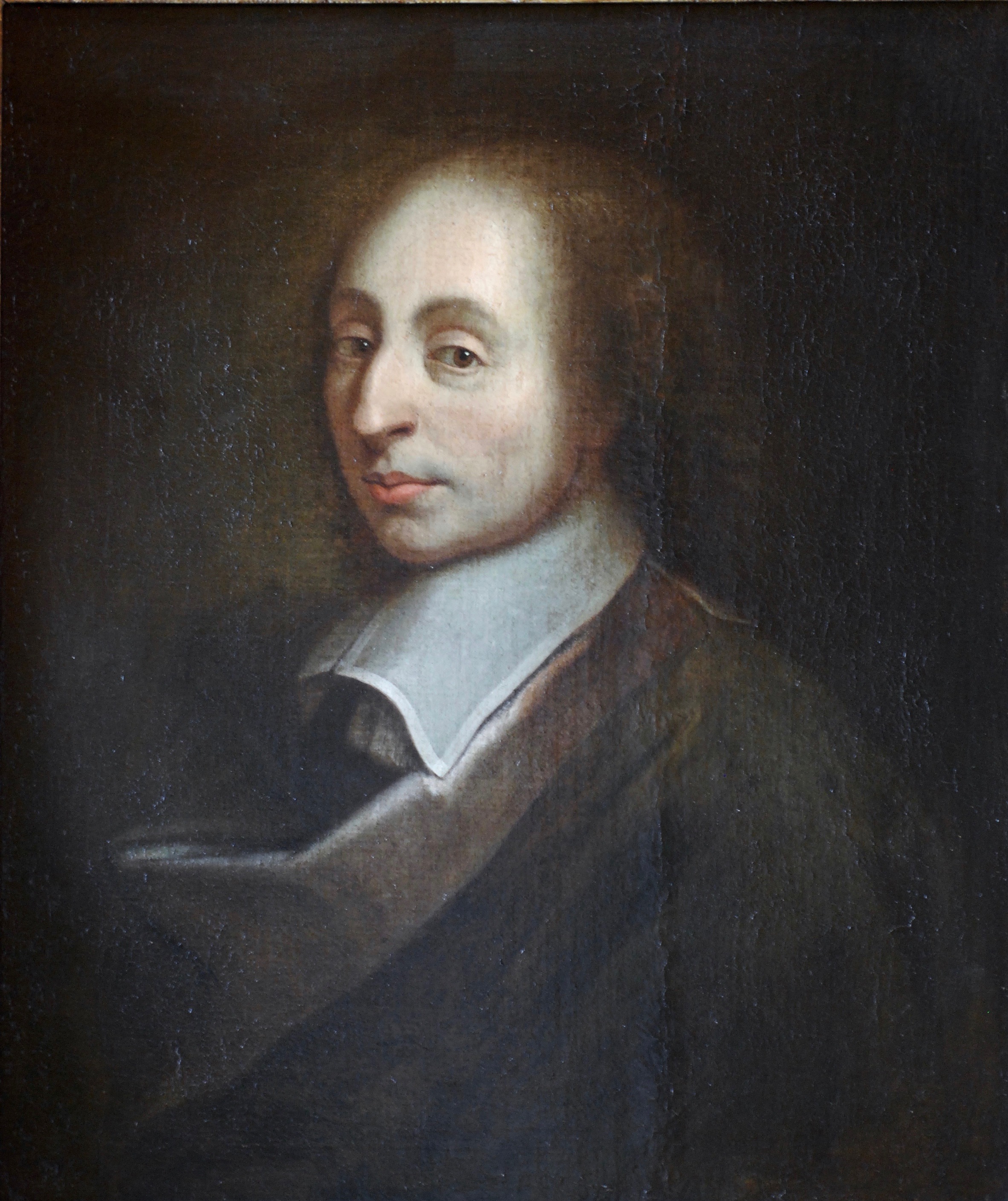
Blaise Pascal
Britannica has a brief synopsis of Pascal's wager here.  

Pascal did not say that we should not weigh evidence, and as a scientist, I have no doubt that he did.  But his wager demonstrates that ultimately faith is a choice, and evidence, either way and to whatever extent, is irrelevant.  Faith is a choice we make in spite of doubt.

It is interesting to note that Pascal did not come to his faith as a result of his wager.  Rather, he crafted his wager as a logical exercise to buttress his existing faith.  Does that diminish the logical progression of his argument and certainty of his conclusion?  Have faith because it is too risky to not have faith.  I don't find that terribly convincing.  Perhaps we can come to faith ignoring evidence.  But can faith be sincere without conviction?  If God sees all, what is the efficacy of faith without conviction?  Pascal suggests that the probabilities of his wager don't matter, only the possible outcomes:  Infinite happiness or infinite suffering or mere finite existence.  Choose one.  And believe accordingly.  Can it be as simple as that?  We all must decide for ourselves.

Christopher Hitchens
As a counter to Pascal's non-evidentiary (to coin a usage) thesis,
 I had to include the fourth horsemanChristopher Hitchens, in the story.  At the time of his death ten years ago, Hitchens was arguably the most famous atheist in the world.  Certainly the most erudite.  Believing that religion was not only unsupported by evidence, but also positively harmful, he described himself as an anti-theistHitchens wrote for Vanity Fair for nearly twenty years.  His counterargumentWhat can be asserted without evidence can also be dismissed without evidence.  Again, can it be as simple as that?  We all must decide for ourselves.

Personally, I've always found people of faith who are willing to admit doubt much more compelling than people of faith with no doubt whatsoever.  But I would like to see all people of faith express a curiosity that extends beyond their own belief system.  It would be good for them, and good for all of us.  Frankly, I find the faithful's lack of curiosity... unforgivable.  And dangerous.

As for the atheists, the first thing that we must acknowledge is that they do not have a duty to prove a negative.  Of course not.  But I have come to believe that the vast majority of them are among the most fervently religious of us all.  They have simply replaced faith in the divine with faith in government.  Their willingness to believe in the efficacy of government, without evidence and often in the face of evidence to the contrary, is indeed an article of faith.  While certainly not true in every case (see the self-described secular conservative, Heather Mac Donald), the correlation between secular beliefs and leftist political thought is astounding.  Government is their religion, and the irony is completely lost on them.
𓐵

Saturday, March 20, 2021

Rikki-Tikki-Tavi

Lost in Wokeness


What?  Your middle-schooler did not read Rudyard Kipling's Rikki-Tikki-Tavi?

Neither did mine.  Isn't that sad?  At one time, this charming story was included in the canon of every well-educated childhood.

But it is just about everything our woke educators hate.  It was written, of course, by a dead, white, male.  An Englishman and a colonialist.  Not only is the story colonialist, but like much of Kipling's work, it is set in India.  And perhaps worst of all, it is an unapologetic tale of good versus evil.  And of good vanquishing evil.

No doubt, our teachers have replaced it with something more appropriate.  

Rikki-Tikki-Tavi is now in the public domain.  So I include it here.

If you are interested, here is a sample of how the story was once taught.

Also, I have added a Lost in Wokeness section to the sidebar.  That should be fun.
𓐵

Sunday, February 7, 2021

Kurt Vonnegut: Long Walk to Forever

Charles Haines reads my favorite short story...

Long Walk to Forever
Kurt Vonnegut
1960


If you prefer to read this lovely piece, find it here.  It's a quick read, about four pages long.  There are a number of film adaptions.  You can find most of them on YouTube.  But personally I don't think any of them are any good.  The production values, casting, and acting just don't live up to the quality of the text.

It is interesting to note that Vonnegut himself did not much care for this story.  It is certainly an atypical piece for him.  He thought it sickeningly sweet.  And to be fair, I guess it is.  But I have always found it quite moving.
𓐵